


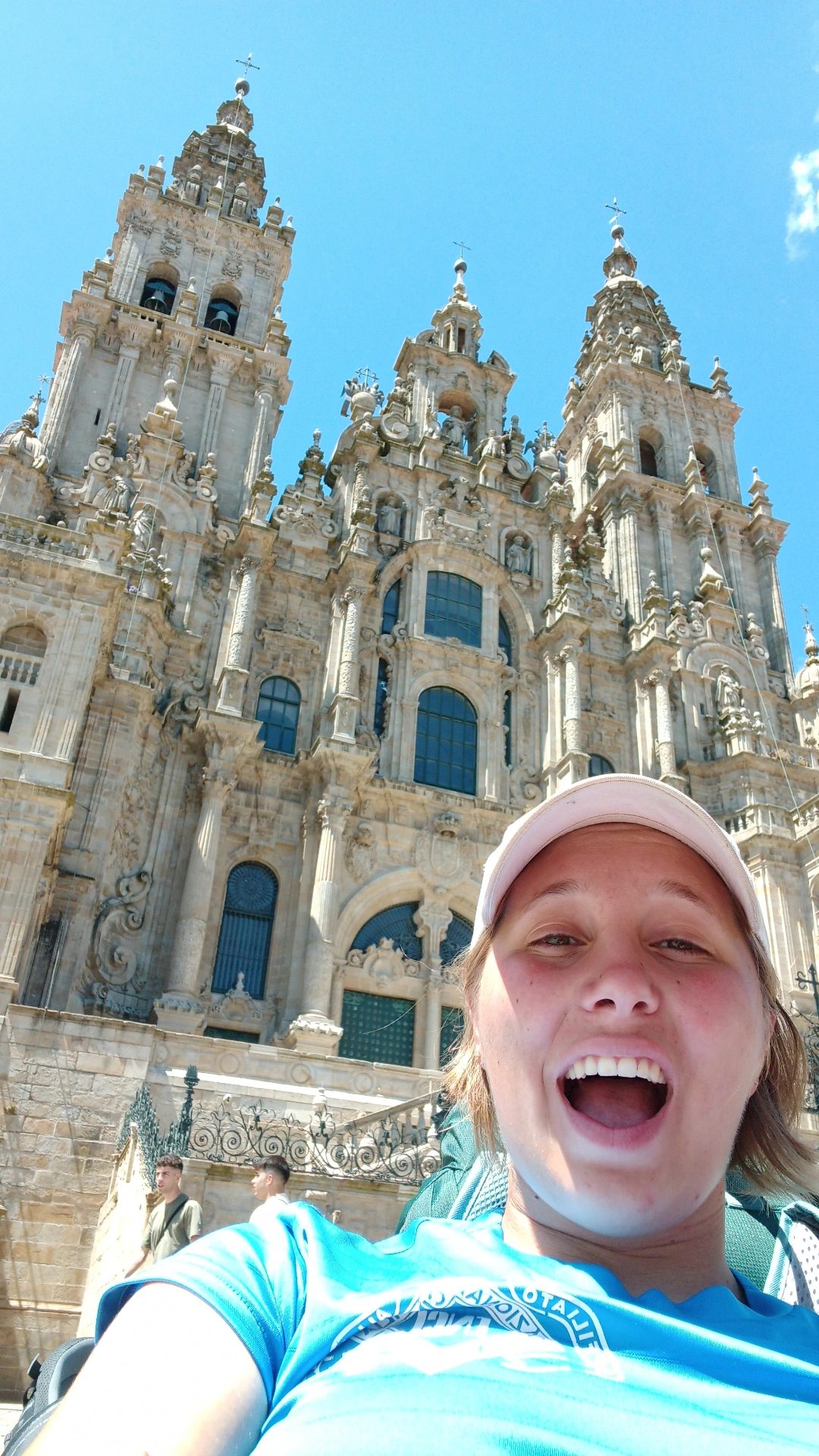
I have traveled a lot: I have been to over 30 countries in my life, including trips with my family, by myself, for pleasure and for work. Although, only some trips end up sticking with you on a deeper level, making for significant changes in your life and unforgettable moments. And you can be sure that these trips will never leave your memory. On this short list of mine, there is the Camino de Santiago… And I’m absolutely sure that anyone who did it will feel similarly.
“Camino de Santiago” can be translated from Spanish to “The Way of Saint James”. It’s a christian pilgrimage, specifically the third most important one in the world, right after the one to Rome and to Jerusalem. Santiago de Compostela is the name of a saint, but also the name of a city in the northern Spanish region of Galicia – very well known for its octopus! Plenty of ways lead to Santiago: you can start in France and walk through the North of the Iberian Peninsula on the French Way; you can opt to take the longest traditional route starting in Sevilla (around 1000km – over 600 miles); or even explore Portugal and depart from Lisbon on the Portuguese Way. Technically, if you really want to make use of your hiking shoes, you could even start in Copenhagen! Although all these routes exist, in all fairness a true pilgrimage starts from your home doorstep. In fact, if we go over the history of this now-popular-hike, all these routes are very recent…
We can’t talk about Santiago de Compostela without mentioning its neighbor: Finisterre. The name of this town literally means “the end of the world” – in Pagan times it was indeed the western-most point known to Europeans, therefore it made sense to think there was nothing past it. In the Atlantic Ocean the Sun died: every sunset, it disappeared into the water, leaving people astonished and in need of an explanation. The so-called “Costa da morte”, taking the life of the Sun every night, quickly became a representation of Hell’s Gate. Many came from all over Europe to observe this phenomenon and find out more about the Sun’s daily destiny… Simply by following the Milky Way to Finisterre, where an altar to the Sun was built to collect donations that would hopefully appease the Gods.
Only in the 9th century, King Alfonso II found out that Saint James had been buried somewhere near the area of Finisterre. He decided to move his body to a place where he could build a chapel and attract hundreds of pilgrims, just like Rome and Jerusalem did. The construction of the huge Cathedral of Santiago began in 1078! The strategic decision of the King brought “tourists” to Galicia, kept the Moors away after Spain regained the Northern territories and helped the growth of the countryside with new towns, monasteries and much more. This is when thousands began travelling to Santiago: some in order to redeem their sins, others as part of their lawful punishments and some “in the name of someone else”… Simply for money. The 12th and the 13th centuries saw an incredible growth, allowing more and more people to settle along the different routes and grow small villages into larger towns, if not even cities.
Unfortunately, in the 14th century, religious wars and the Reformation brought this development to a stop. It won’t be until the 1990s that the Camino will find its lost importance: in 1993 it was officially nominated a UNESCO World Heritage Site, bringing record numbers on its paths. Much of the work was done in the 80s, when the typical yellow arrows were implemented for better directions and the priest Elías Valiña Sampedro highly promoted it as an amazing opportunity for cultural exchange. The Camino can now be done both for religious and for spiritual reasons… Or more simply as a long hike to clear your head. Ever since the beginning of its history, “safety in numbers” was an important mantra for the people who walked it: if then it was more about actual safety of the pilgrims, now it has turned into a deeper connection that some may even define as magical.
I don’t know why I walked it, but I can easily say that it changed my life for the better. The moments alone, the moments with others, the challenges you have to face, both physical and mental… It all comes down to a very simple philosophy of life: “Keep moving forward”. Despite all the things that humans have come up with, it’s quite impressive how something so simple like walking can make a huge difference.
No responses yet