


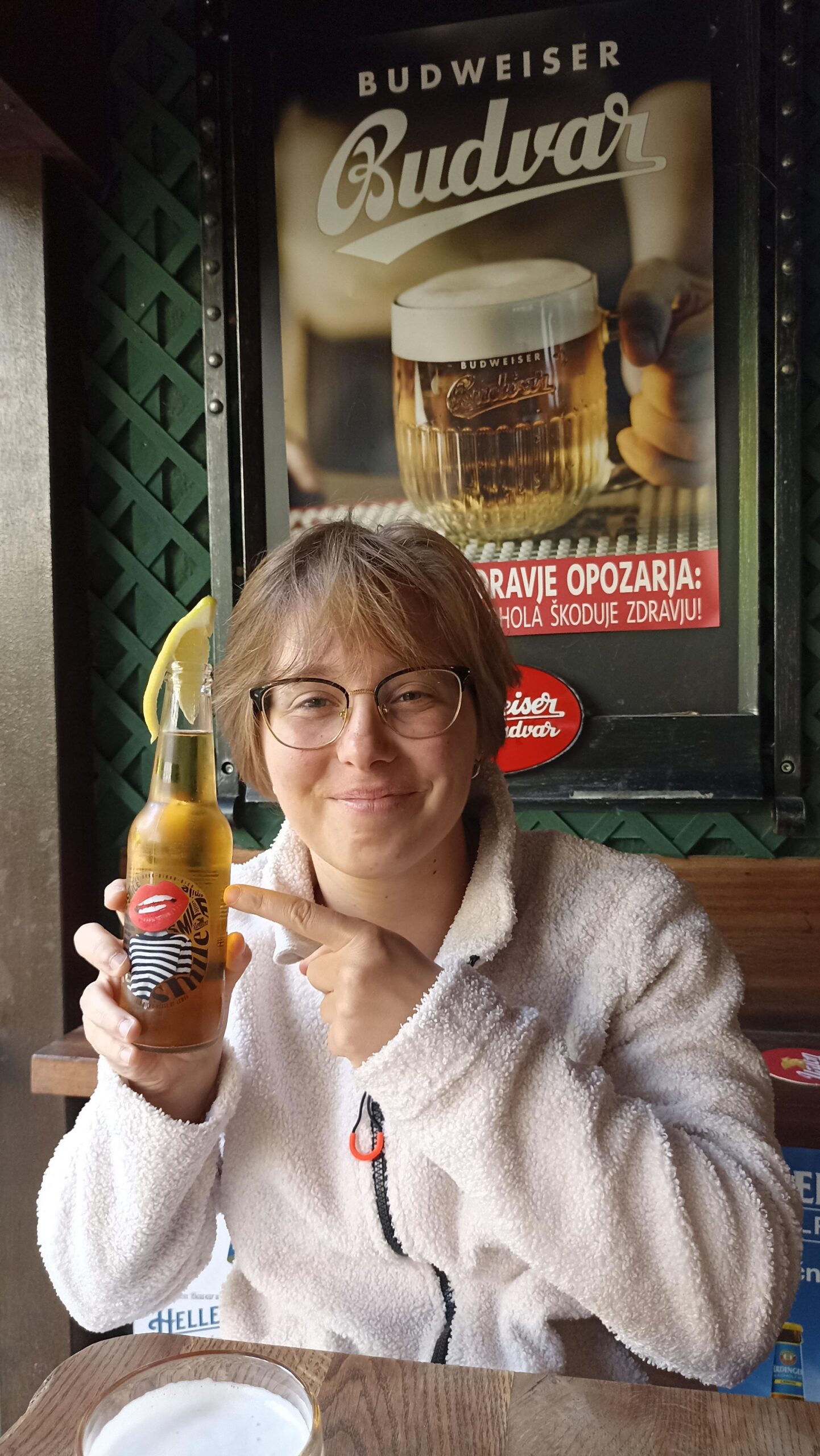
If you know me, and especially if you have travelled with me, you will be aware of my love for beer. Defeating all odds, in a world where beer is for men and women shall only drink wine or cocktails, I fell in love with this drink early on. Initially I only consumed big-brand-names, as this was the “party drink” of my choice. But as time went by I learned to understand beer more deeply, actually tasting it and developing specific preferences.
When travel “took over” both my private and work lives, beer became even more: a tool to dive into the local culture through younger generations of brewers. I fell in love with small breweries randomly found at local fairs, food markets and in those outskirts-neighborhoods nobody really visits. Scouring google maps for draft beer became a way to go beyond the touristic sights. I grew more and more interested in the nature of this drink and especially in its connection to the territory and area I was visiting.
Beer is in fact available pretty much everywhere – unlike wine, it doesn’t have any climatic limits, simply requiring specific tools and environments with controlled temperatures. And its history goes way back: some even go as far to say that we brewed beer before making bread! I mean, isn’t that insane? Like wine, it was a safer drink than water and for the poorer people, an important and cheap source of vitamins, necessary for survival. I can’t say our reasons behind it are still as noble, but present-time beer definitely tastes better…
Sources say there were already breweries in Egypt in 3000BCE! Because beer was considered a food, women were mostly responsible for its production throughout history – from Sumerian farmers to Ninkasi’s priestesses, history also tells us that beer was often connected to religion, as it was an offering to the Gods. After the quieter period with the Greeks and the Romans, beer officially spread all over Europe as a common drink in the Middle Ages. This is also when Christian monks took over its production and allegedly introduced hops (probably for preservation reasons rather than taste). With hops shipments being quite common in the 13th century, we know that by the end of the Middle Ages brewing methods were developed all over the continent. Although, only in the 17th and 18th centuries there was a big shift in quality and production: yeast was first observed under the microscope; breweries were founded in the New World and the Industrial Revolution introduced automatic bottling, refrigeration, railroad transport, etc.
At this point the two main fermentation methods had emerged and established themselves: on one end the German, Lager, bottom-fermentation brewing; on the other end the English, top-fermentation for Ales. Prohibitionism hit the market hard, leaving only mass producers on the scene. Just in the 80s and 90s did microbreweries reemerge again… And we are seeing them flourish right now. That is why I believe beer can be an amazing way to truly immerse yourself in the local culture, not only to have a fun night out, but especially to meet people and learn about the history of the country you are visiting. Never have I ever had a bad time at a brewery or draft-beer-bar! And if you enjoyed reading this, even though you don’t like beer, I challenge you to go and try it again – the variety in taste is unmatched! I’m sure you will find your own.
Beer lovers: stay tuned for some exciting news in the upcoming weeks! I’m looking forward to sharing my love for beer in more ways than one…
One response
Love it ❤️ Nice write up. Excited to read more stuff about beer 🤤